
Researchers at the Indian Institute of Technology (IIT) Mandi have developed an innovative artificial intelligence (AI)-based mathematical modelling framework capable of predicting changes in wildlife populations, potentially offering scientists a powerful tool to understand ecosystem dynamics and assess future changes in animal populations.
The newly developed model uses historical wildlife data to forecast fluctuations in predator and prey populations, even when available information is limited, irregular or uncertain. The research is expected to contribute to wildlife conservation and ecological studies by helping scientists understand the complex relationship between different species and anticipate changes that could affect the balance of natural ecosystems.
The research focuses on the long-term population records of wolves and moose in Isle Royale National Park, a 544-square-kilometre island located in Lake Superior, Michigan, USA. Wolves are the primary natural predators of moose in the park, with moose accounting for nearly 90 per cent of the wolves’ winter diet. Their populations have been monitored annually since 1959, making the data one of the world’s longest-running records of predator-prey interactions.
Over the decades, both species have experienced considerable population fluctuations. Wolf numbers declined sharply in the early 1980s following a disease outbreak, while the moose population witnessed a major decline during the mid-1990s. Such changes highlight how disturbances in predator or prey populations can influence the wider ecosystem and make it important to understand the factors driving these fluctuations.
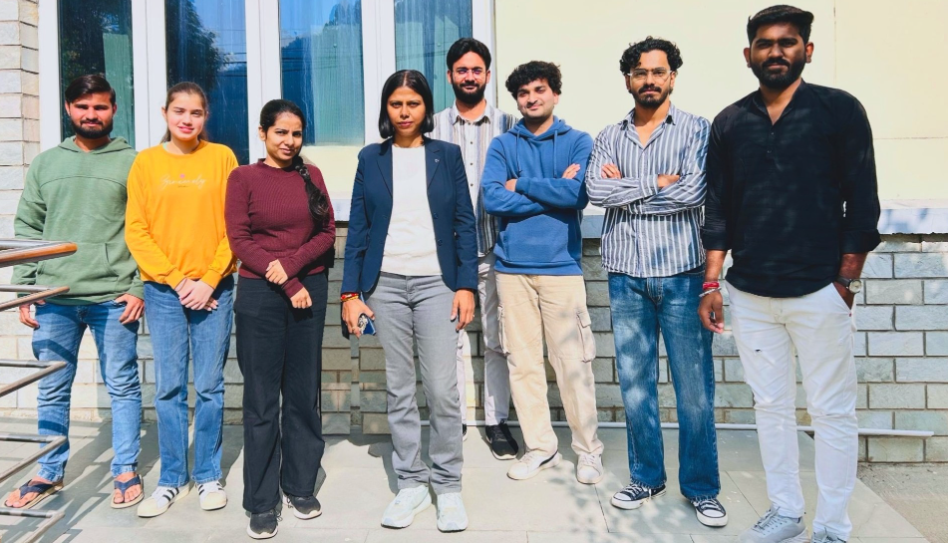
The research has been conducted by Dr Nitu Kumari, Professor at the School of Mathematical and Statistical Sciences, IIT Mandi, along with her PhD student Anurag Singh.
The researchers developed a mathematical framework that analyses historical population data to estimate key ecological factors, including the reproduction rate of moose, natural changes in wolf populations and the impact of predation on prey numbers. Based on these estimates, the model can forecast wildlife population trends for a period of up to five years.
To improve the accuracy of predictions, the researchers examined two different approaches to understand how wolves hunt moose. Their findings revealed that the model based on the relationship between predator and prey population sizes performed better than the alternative approach. The framework also successfully identified periods of unusual population decline in the historical records.
The model’s predictive performance was further examined using data for the 2020–2024 period. It forecast an increase in wolf numbers alongside a decline in the moose population, broadly corresponding with the population trends subsequently observed in the park.
According to Professor Kumari, this is the first study, to the best of her knowledge, to employ a self-adaptive mathematical modelling framework combining physics-informed neural networks and transfer learning to investigate predator-prey population fluctuations.
The findings demonstrate how AI-assisted mathematical modelling can help overcome challenges associated with incomplete environmental records and uncertainties in ecological data. By combining artificial intelligence with mathematical principles, the framework can extract meaningful patterns from historical observations and generate predictions that may support wildlife monitoring, ecological research and conservation planning.
The development further highlights IIT Mandi’s contribution to interdisciplinary research, bringing together artificial intelligence, mathematics and environmental science to address complex challenges related to wildlife populations and ecosystem sustainability.