
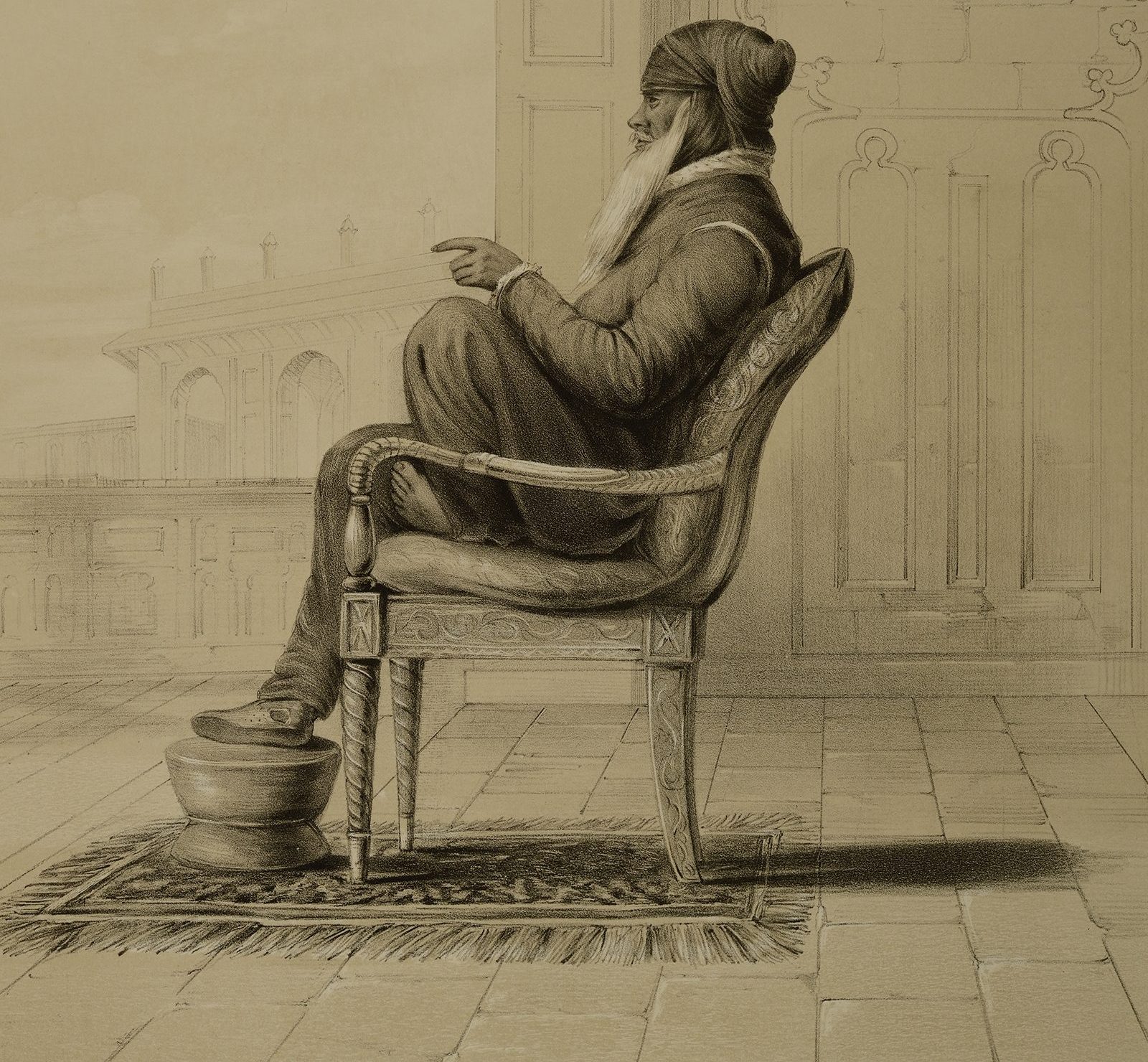
Born on November 13, 1780, Maharaja Ranjit Singh rose from the fractured political landscape of 18th-century Punjab to establish one of the most formidable indigenous states of the 19th century. Celebrated as Sher-e-Punjab and a brilliant commander, his greatest achievement lay beyond the battlefield: he built an inclusive state in a region scarred by invasions and political fragmentation.
His legacy remains a study in statecraft, offering lessons in merit, religious pluralism, strategic restraint and institution-building. French traveller Victor Jacquemont, who met him in Lahore in 1831, wrote in Letters from India: “I had often seen Bonaparte and for some time I had desired to see the Bonaparte of the East.” The comparison with Napoleon reflected the reputation Ranjit Singh enjoyed beyond his kingdom.
The rise of a statesman
After the death of his father, Maha Singh, 12-year-old Ranjit Singh inherited the leadership of the Sukerchakia Misl, centred on Gujranwala. Punjab was divided among 12 Sikh misls and surrounded by powerful adversaries. A great-grandson of Budh Singh, who, according to Sikh tradition, had received initiation from Guru Gobind Singh, Ranjit Singh had no formal schooling, though he later learned Punjabi, French and Persian. As a child, he contracted smallpox, which left him blind in one eye and scarred his face.
On July 7, 1799, at the age of 19, he entered Lahore with the support of his mother-in-law, Mai Sada Kaur, chief of the influential Kanhaiya Misl. Sohan Lal’s Umdat-ut-Tawarikh and Khushwant Singh’s A History of the Sikhs recount that Lahore’s residents, exhausted by Bhangi Misl misrule and weakened Afghan control, invited him to take the city. The fort gates opened to a welcome of gun salutes.
His rise came amid many challenges, including Nadir Shah’s invasion of Delhi in 1739, Ahmad Shah Abdali’s repeated attacks, the decline of the Mughal Empire, the growing power of the Marathas and the expanding influence of the East India Company. Starting with a small kingdom, Ranjit Singh united rival Sikh groups, built a strong state and extended its borders westwards, keeping invaders from entering through the Khyber Pass.
The making of an inclusive state
Crowned on Vaisakhi in 1801 by Sahib Singh Bedi, a descendant of Guru Nanak, Ranjit Singh drew legitimacy from Sikh traditions while accommodating other faiths. Writer Rajmohan Gandhi notes his simple dress and lack of royal ostentation, suggesting that his authority rested on military success, political relationships and institutions.
As JS Grewal records in The Sikhs of the Punjab, Sikh, Hindu and Muslim officials, alongside Europeans, served in the Lahore Darbar’s civil, military and diplomatic establishments. A famous anecdote, recorded by Khushwant Singh, tells of Ranjit Singh paying a considerable sum for a beautifully calligraphed Quran. When Faqir Azizuddin asked why he had bought a text from another faith, the Maharaja reportedly replied that God had given him one eye so that he could look upon all religions equally. Whether apocryphal or not, the story reflects his enduring reputation for accommodation.
Hungarian artist August Theodor Schoefft’s famous painting of the Lahore Darbar shows the diversity of Ranjit Singh’s court, with Sikh sardars, Muslim scholars, Hindu and Dogra nobles, and European officers. Among the Maharaja’s closest advisers was Faqir Azizuddin, a Muslim physician and diplomat who handled important dialogues with the British and neighbouring powers. His brothers, Faqir Nuruddin and Faqir Imamuddin, also held senior administrative and military responsibilities.
Raja Dina Nath, a Kashmiri Pandit, became a leading figure in finance and civil administration. British administrator Lepel Griffin later compared his political abilities to those of French diplomat Talleyrand. Muslim officers Mian Ghaus Khan and Sheikh Elahi Bakhsh commanded the artillery. Hari Singh Nalwa became one of the empire’s best-known commanders, securing its north-western frontier. The Dogra brothers, Dhian Singh, Gulab Singh and Suchet Singh, also rose to prominence. European officers Jean-François Allard, Jean-Baptiste Ventura, Paolo Avitabile and Claude Auguste Court helped modernise the Khalsa Army.
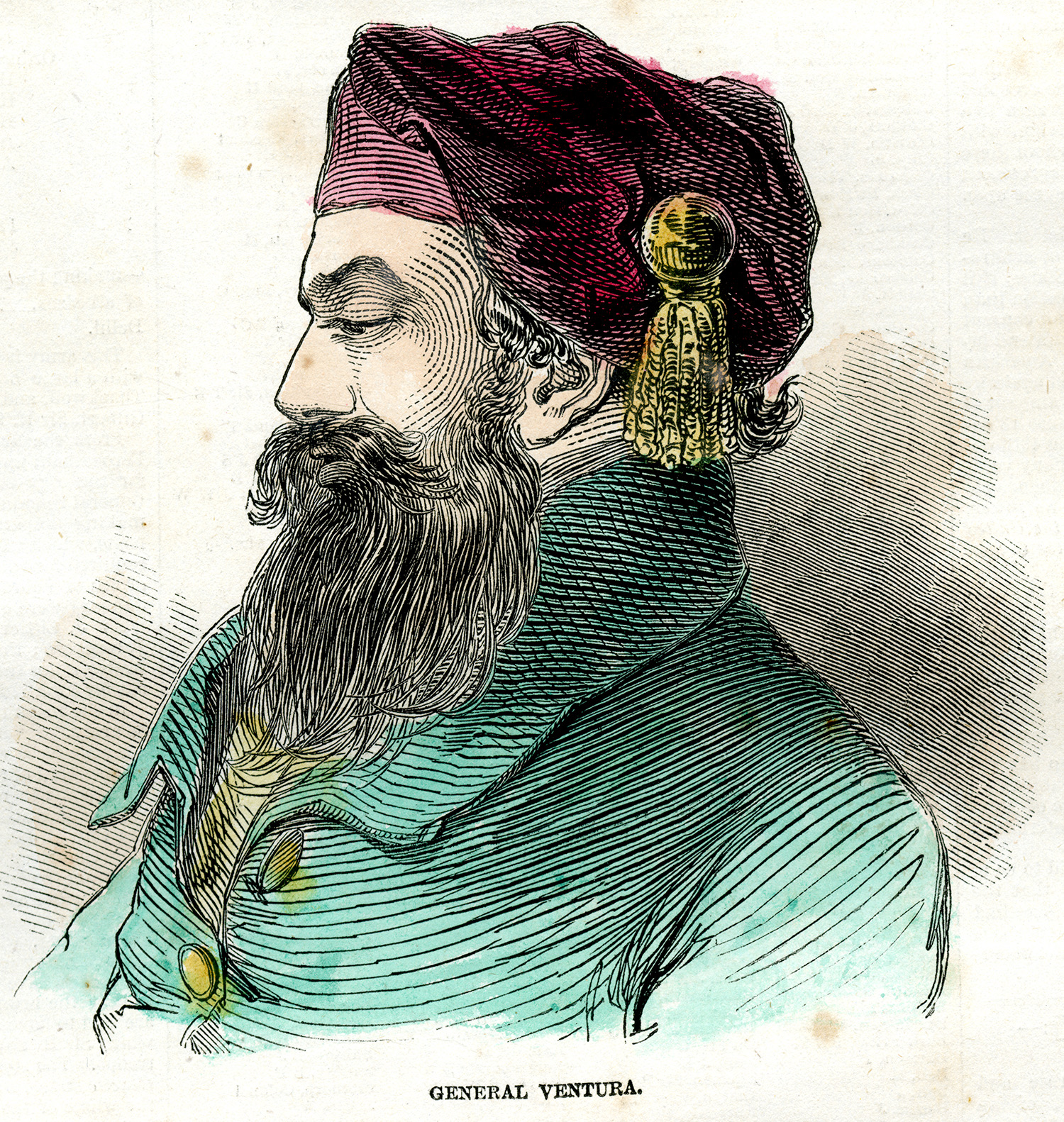
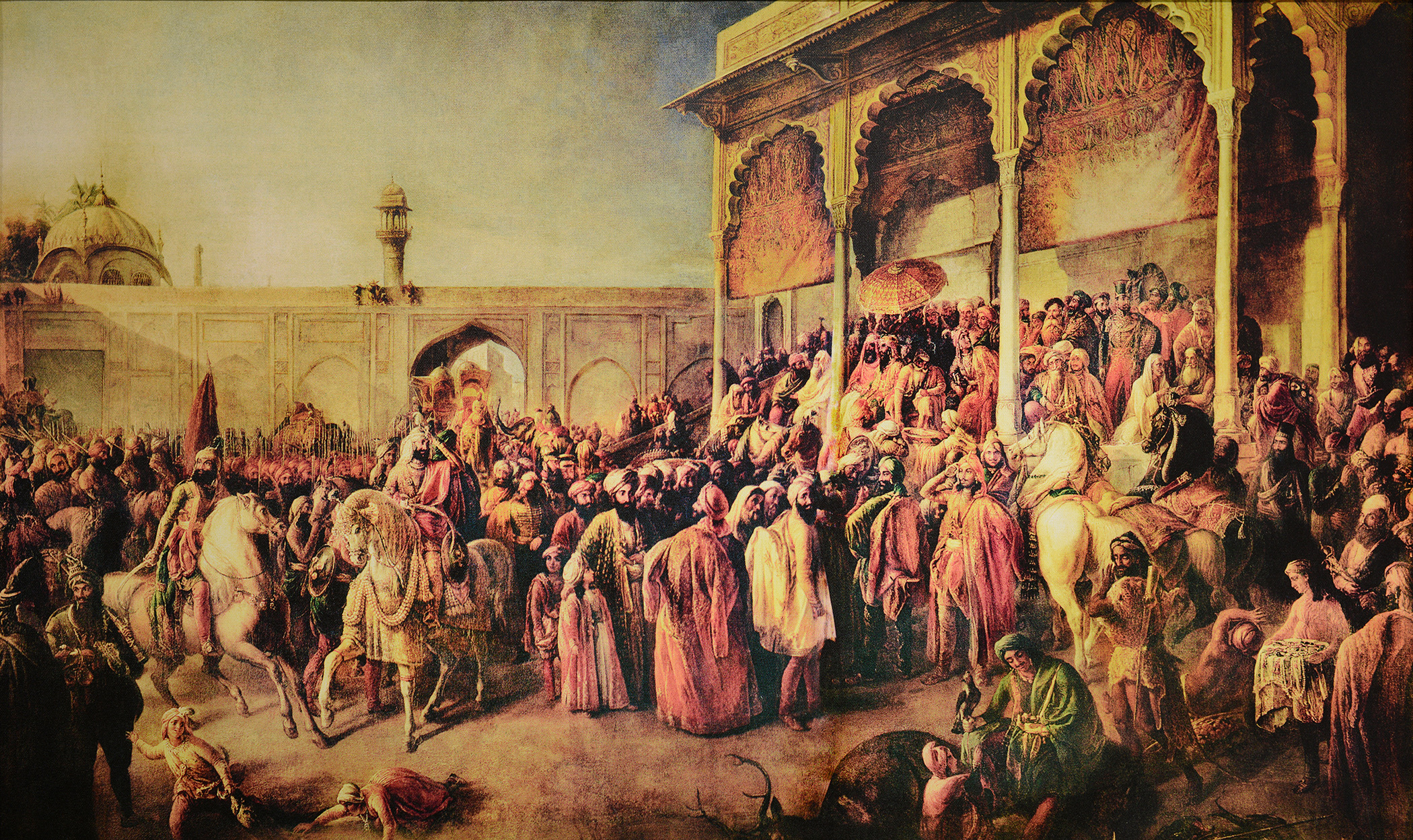
Portrait of Jean-Baptiste Ventura, European officer in Maharaja Ranjit Singhs Khalsa Army, alongside August Schoefft’s celebrated painting of Lahore Darbar
Rooted in Sikh political traditions, the empire was not a theocracy in the modern sense. Ranjit Singh patronised institutions across faiths, making offerings to the Harmandir Sahib, Kashi Vishwanath Temple and Muslim shrines and mosques, including Sufi shrines in Lahore. The Nanakshahi coins issued under his authority invoked the names of Guru Nanak and Guru Gobind Singh rather than celebrating the Maharaja himself.
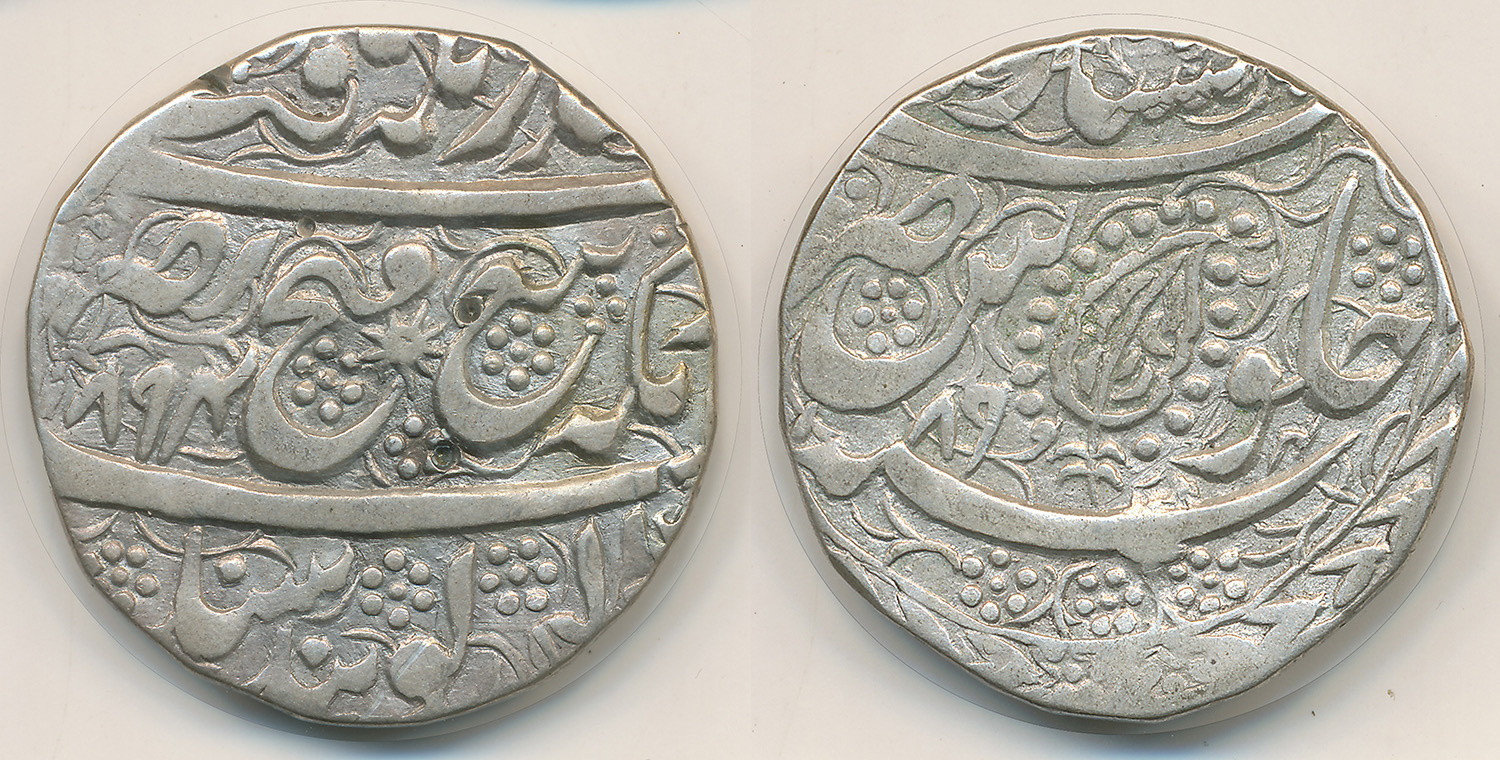
Silver Nanakshahi rupees of the Lahore Darbar, bearing Persian inscriptions invoking Guru Nanak and Guru Gobind Singh.
Mint: Peshawar Samwat 1894 AD 1837.
Period: Sikh Empire, during the reign of Maharaja Ranjit Singh.
His association with Moran, a Muslim courtesan, also revealed the limits of royal authority by religious institutions. When the relationship drew the attention of the Sikh establishment, he submitted to the authority of the Akal Takht and the disciplinary proceedings initiated by Akali Phula Singh instead of dismissing them by virtue of his sovereignty.
None of this makes the Sikh Empire a modern democracy. It was built through conquest and governed through a highly centralised system that dependent on the ruler. Yet its diverse administration, cross-faith patronage and the expectation that even the Maharaja answer to an authority beyond himself offer lessons in accommodation and restraint. A state’s strength need not depend on religious uniformity, it can also grow from recognising talent and building trust across communities.
Strength as the guarantor of peace
Recognising that his state could not withstand European power with an outdated army, Ranjit Singh recruited French and Italian officers, including Allard and Ventura, after Napoleon’s defeat in 1815. The elite Fauj-i-Khas combined European drill techniques with Sikh martial traditions. The Khalsa Army also developed formidable artillery battery in Asia, including the ZamZama Canon. 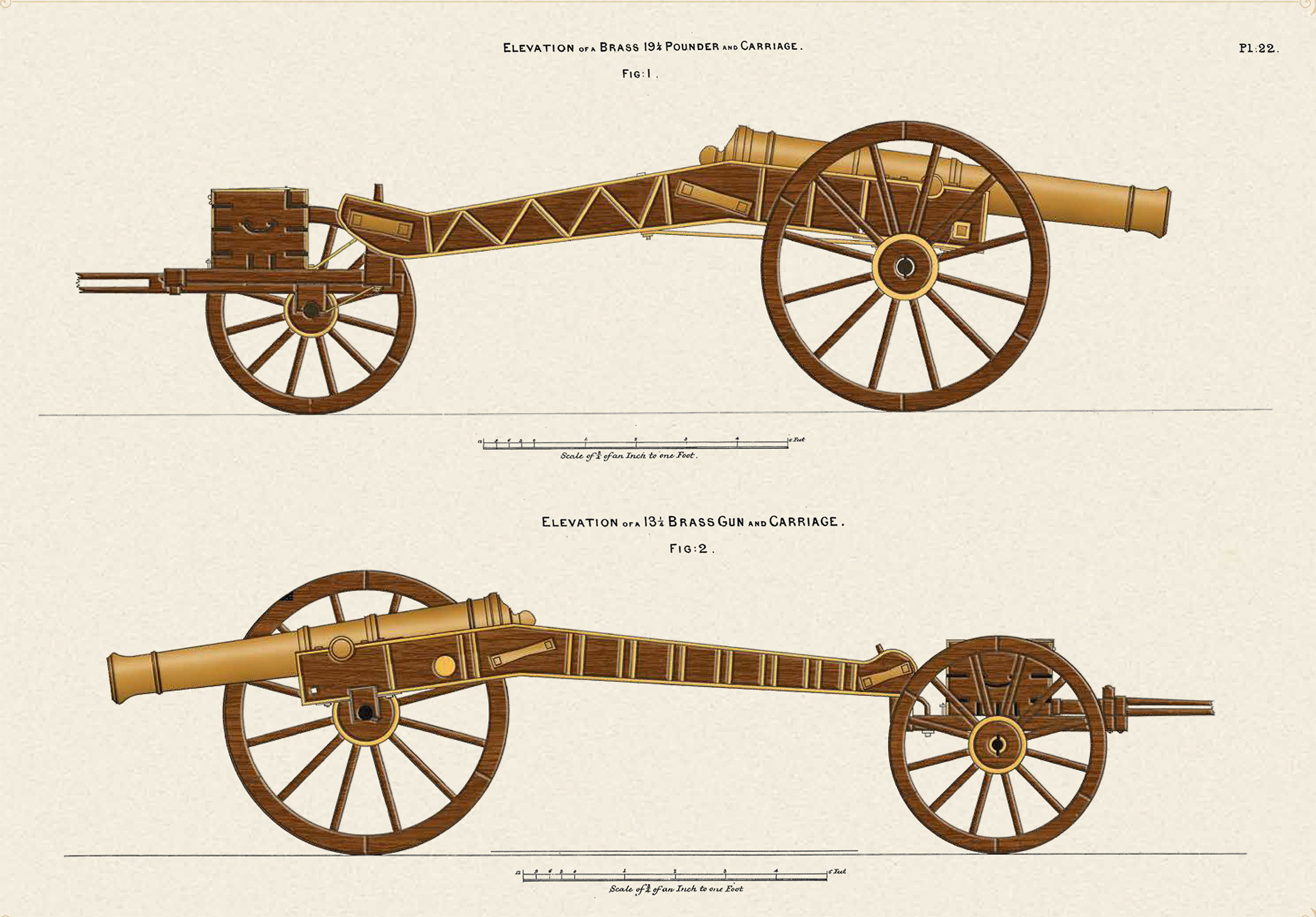
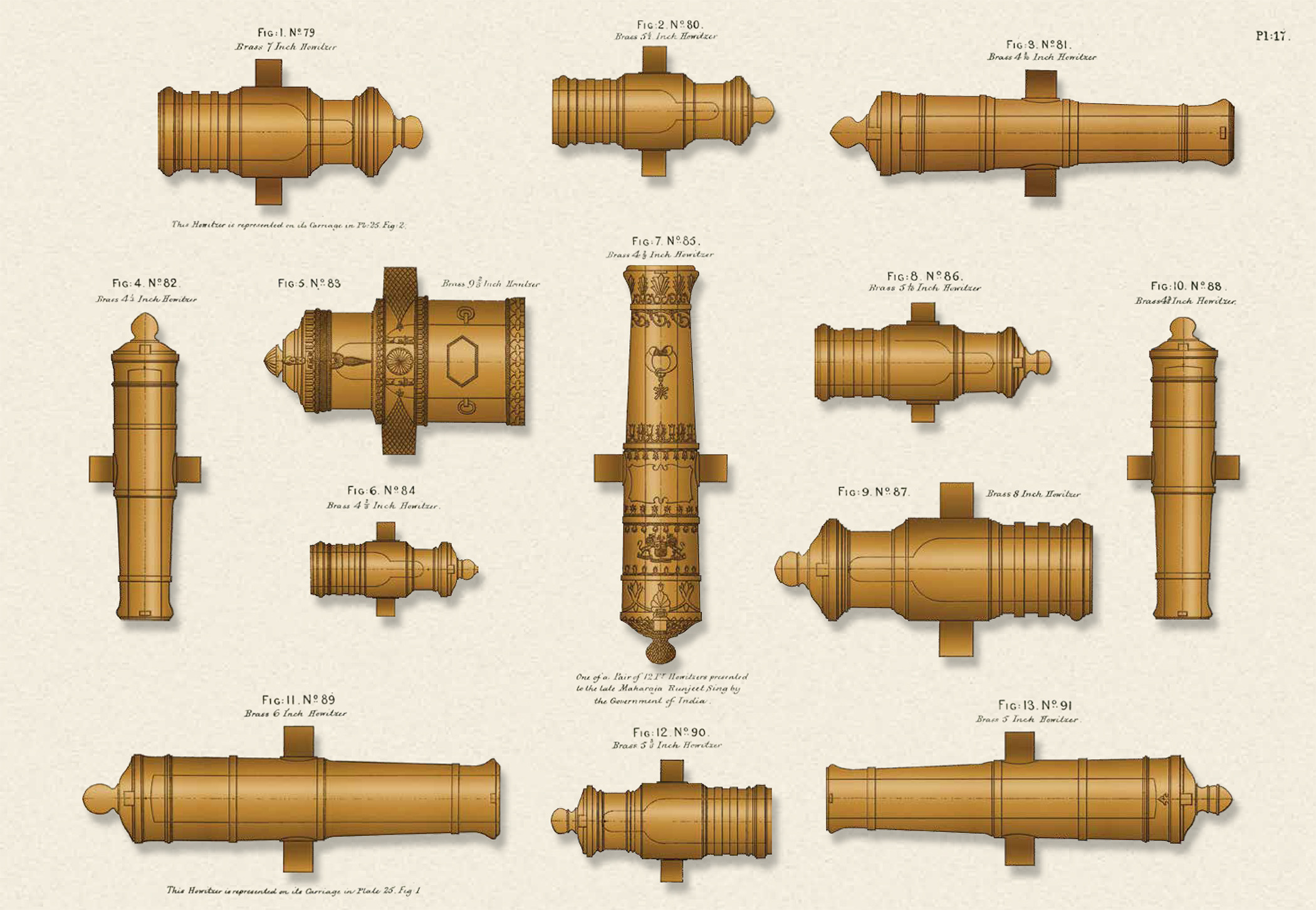
Brass guns of the Sikh Khalsa Army, captured by the British at the Battle of Sabraon (1846). Made of brass with wooden carriages each gun bore a Persian inscription plate.Almost all were subsequently melted down by the British, leaving the Zamzama cannon as the only surviving gun from this group. By Panjab Digital Library’s publication Guns of Glory: Sikh Guns and Inscriptions, preserve a record of this lost Sikh Artillery. The Khalsa Army had developed one of the most formidable artillery arms in nineteenth-century South Asia.
The British closely monitored the Sikh Empire but did not invade Punjab during Ranjit Singh’s lifetime. The Treaty of Amritsar in 1809, which recognised the Sutlej as the boundary between the two powers, reflected British strategic concerns as well as the Maharaja’s diplomacy and statecraft.
On the north-western frontier, he brought Attock and Peshawar under Sikh control, strengthened existing fortifications and commissioned new ones. These included Jamrud Fort, near the Khyber Pass, built under Hari Singh Nalwa’s supervision in 1836. Together, these strongholds helped secure the Indus frontier and the gateway to the subcontinent.
Ranjit Singh also generally avoided indiscriminate destruction following military victory. Defeated rulers were often restored with honour or incorporated into the new order rather than eliminated. Lepel Griffin observed that the Maharja preferred conciliation to vengeance, securing the loyalty of former rivals through generosity and political accommodation. His example suggests that durable peace requires strength, restraint and diplomacy.
One of the most beautiful tributes to Maharaja Ranjit Singh came from British artist Emily Eden, sister of Governor-General George Eden. She visited the Lahore Darbar in 1838, just months before the Maharaja’s death. Her portrait shows him in simple clothes, without heavy royal jewellery, a striking contrast to the vast empire he ruled.
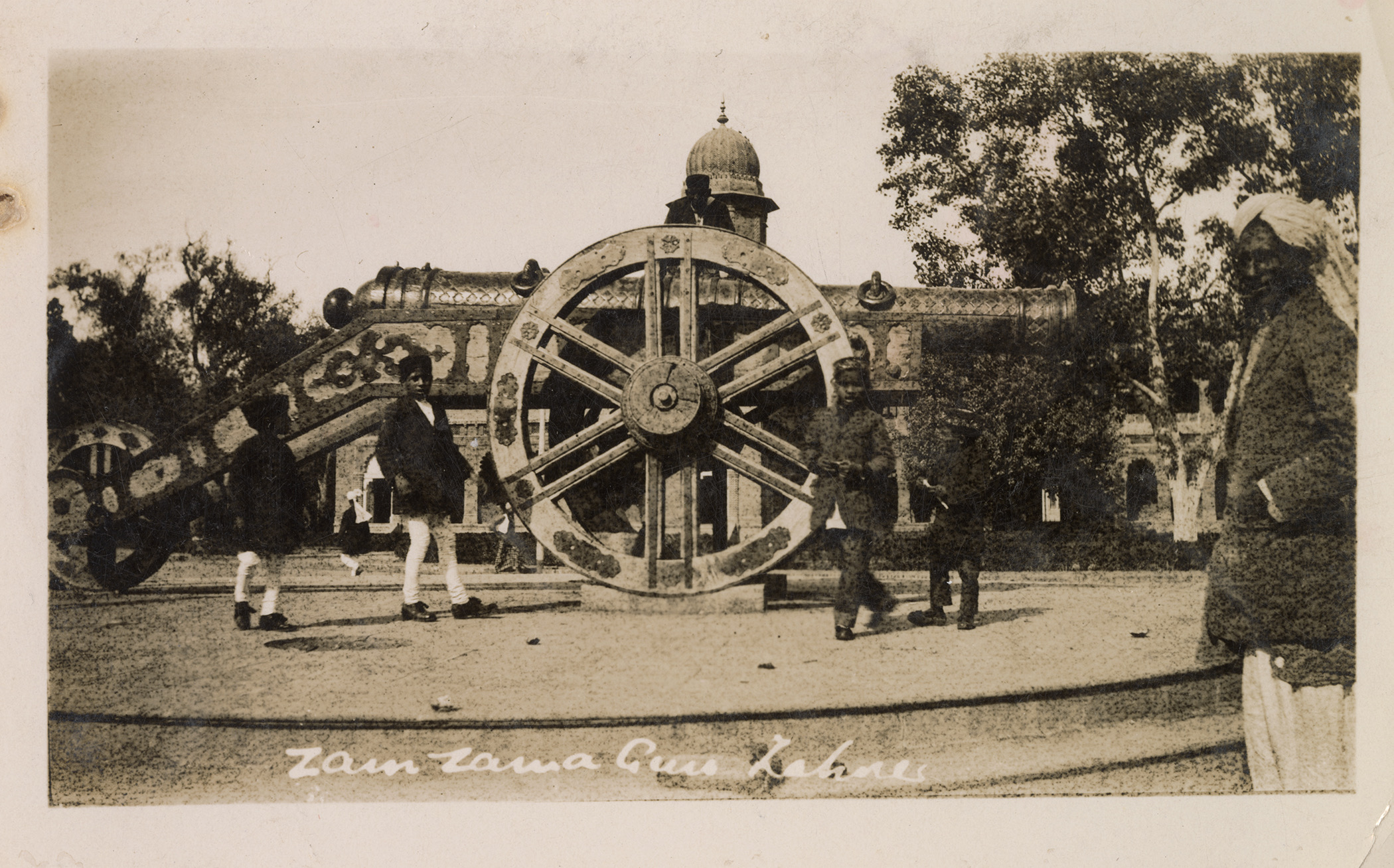
Zamzama, the celebrated Sikh-era cannon, pictured on a c.1900s postcard while displayed at the Lahore Museum.
A lesson for our times
The 21st century is vastly different from 19th-century Punjab, but the principles of sound statecraft remain remarkably familiar. Fractured societies need bridge-building leadership; governments weakened by patronage need merit-based institutions; geopolitical uncertainty demands foresight, preparedness and restraint; and declining public trust requires leaders who strengthen institutions rather than place themselves above them.
Ranjit Singh’s reign was not without contradictions, and the empire did not survive the upheavals that followed his death in 1839. Its decline raises questions about the vulnerabilities of a system so closely tied to one ruler. Yet the administrative diversity he fostered, his accommodation of different faiths and his management of relations with a powerful colonial adversary remain central to his legacy.
Revisiting Ranjit Singh is not about romanticising the past or searching for a perfect historical model. It is about recognising that a state’s strength lies in the trust it builds among its people, the institutions it sustains and the diversity it can accommodate.
Kanwal Singh is a writer and scholar from Jammu and Kashmir.