
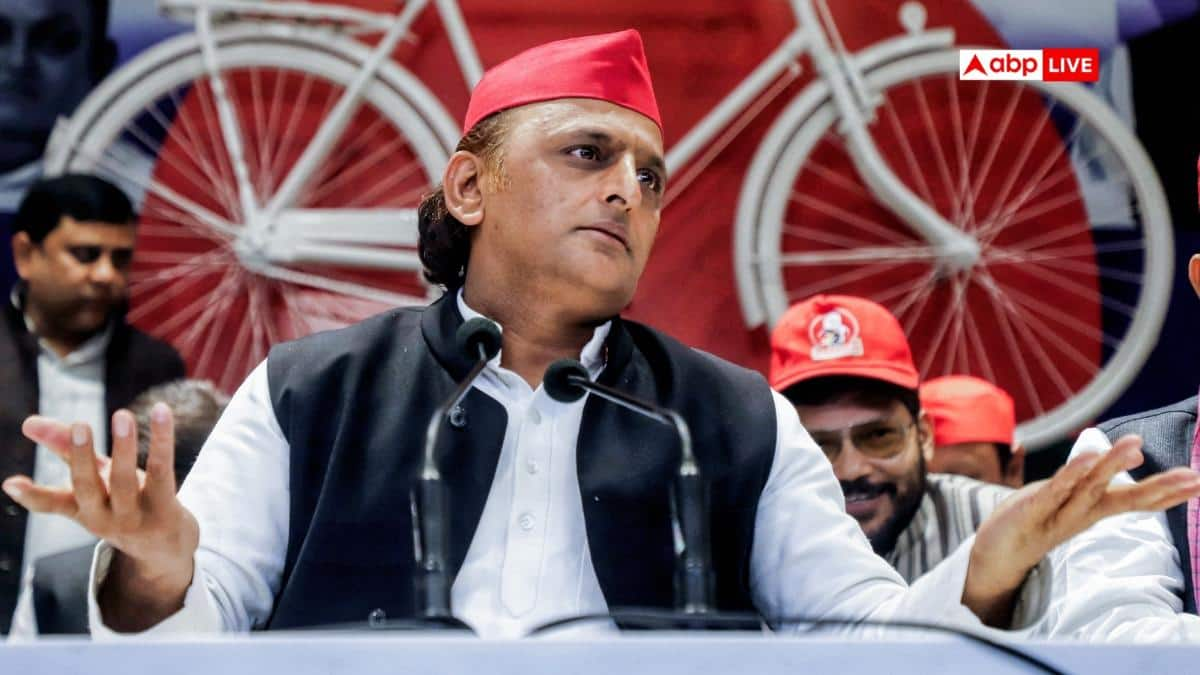
The Samajwadi Party (SP) on Saturday issued a three-line whip directing all its Lok Sabha MPs to remain present throughout the upcoming special session of Parliament and vote against the Centre's proposed delimitation Bills.
The directive, issued by party MP and Chief Whip Dharmendra Yadav on November 28, asks all SP members to attend the proceedings from November 30 to December 3, 2026, and oppose the proposed legislation when it is put to vote.
In the whip, Yadav said, "The special session of Parliament is commencing on Monday, November 30, 2026, and is scheduled to continue until Thursday, December 3, 2026. During the session, the government is introducing the Constitution (132nd Amendment) Bill, 2026, the Delimitation (Second) Bill, 2026, and the Union Territories Laws (Amendment) Second Bill, 2026."
He further instructed all party MPs to remain present and vote against the Bills.
"All Samajwadi Party members in the Lok Sabha are hereby instructed to remain present in the House throughout the session and vote against the Bills when they are put to vote," the whip stated.
TMC, NCP-SP Also Issue Whips Ahead Of Special Session
The SP's directive comes amid increased political activity ahead of the special sitting of Parliament, scheduled to begin on November 30. The Centre is expected to introduce revised legislative proposals concerning delimitation and women's reservation during the session.
Other Opposition parties, including the All India Trinamool Congress (AITC) and the Nationalist Congress Party-Sharadchandra Pawar (NCP-SP), have also issued three-line whips to their Lok Sabha MPs.
The AITC has directed its MPs to attend all sittings from November 30 to December 4 and follow the party's position on the key legislative business. Similarly, NCP-SP Chief Whip Amol Kolhe has instructed party MPs to remain present during the same period and support the party's stand.
ALSO READ: 97 MPs Get New Seating Arrangements In Lok Sabha After DMK Backs Delimitation Bill
What Do The Centre's Proposed Delimitation Bills Say?
The proposed legislative package comprises the Constitution (132nd Amendment) Bill, 2026, the Delimitation (Second) Bill, 2026, and the Union Territories Laws (Amendment) Second Bill, 2026.
The proposals seek to raise the maximum strength of the Lok Sabha to 850 members, including up to 815 representatives from states and 35 from Union Territories.
The package also proposes a 50 per cent increase in the number of seats allocated to each state and Union Territory, along with a corresponding increase in the strength of State Legislative Assemblies.
The changes are aimed at facilitating the implementation of the Nari Shakti Vandan Adhiniyam, which provides for 33 per cent reservation for women in the Lok Sabha and State Assemblies.
ALSO READ: 'BJP Will Rule For 50 Years If ...': Congress Leader Ashok Gehlot's Big Claim On Delimitation Bill
DMK, YSRCP And NCP-SP Support Revised Proposals
The Centre's efforts to secure the required two-thirds majority for the constitutional amendment have received a boost after the DMK, YSRCP and NCP-SP indicated support for the revised proposals. This has taken the NDA's estimated strength in the Lok Sabha to around 354 MPs.
The DMK has backed the proposed 50 per cent increase in parliamentary seats across states while maintaining that Tamil Nadu's existing 7.18 per cent share of representation must be protected.
However, the estimated tally remains below the 360 votes required for a two-thirds majority if all 540 sitting members participate in the vote.
The Opposition has supported women's reservation but objected to linking its implementation with delimitation. Opposition parties have demanded that the delimitation exercise be based on the latest Census data.
The Centre, meanwhile, has proposed using the 2011 Census for redrawing constituencies and determining seats reserved for Scheduled Castes and Scheduled Tribes, while retaining the 1971 population basis for state-wise allocation of Lok Sabha seats until 2051.