
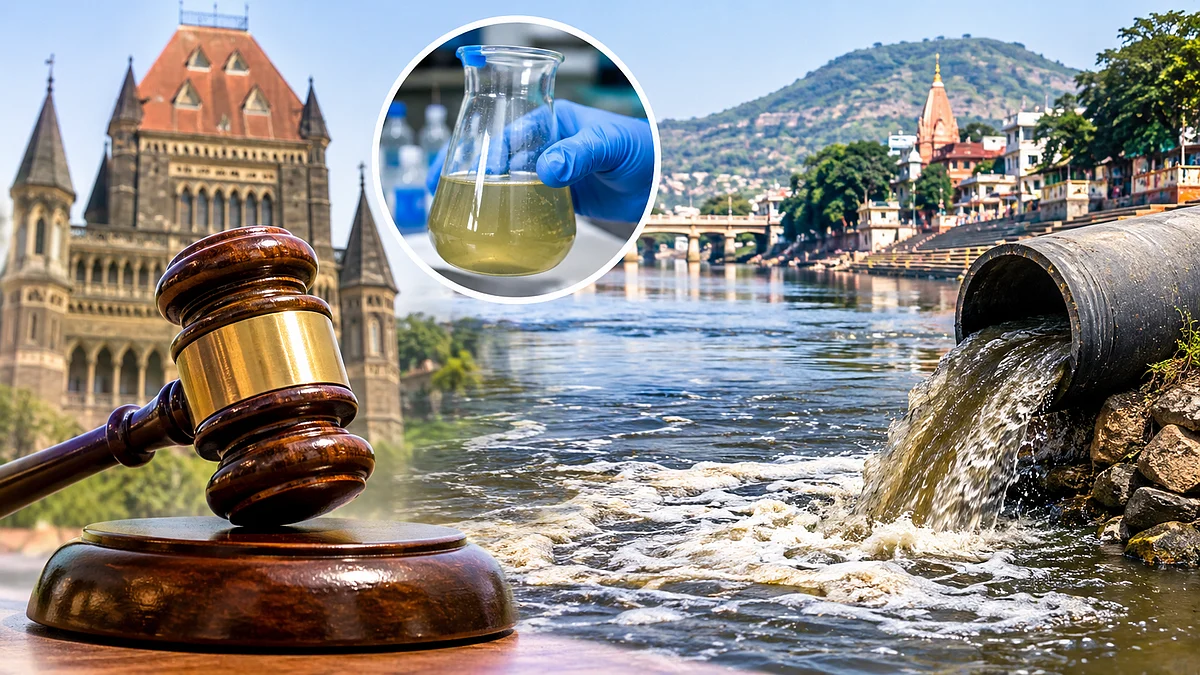
Nashik: The issue of pollution in the Godavari River has once again come into focus ahead of the forthcoming Simhastha Kumbh Mela. In an affidavit submitted to the Bombay High Court, the Maharashtra government has disclosed that sewage from seven drains in Nashik city continues to flow directly into the Godavari. The disclosure, based on a survey conducted by the Nashik Municipal Corporation (NMC), highlights the challenges facing the administration in its efforts to make the river pollution-free.
According to the NMC survey, 25 drains from Nashik city lead into the Godavari, including 13 on the right bank and 12 on the left bank. Of these, 10 drains were found to be dry during the survey, while sewage from five drains has been successfully diverted into the main sewerage network. However, sewage from seven drains continues to enter the river.
The civic administration has proposed measures to divert sewage from these seven drains into the main sewerage system.
Nashik: Tukaram Mundhe To Interact With Youth At ‘Kumbh Of Ideas’ On January 3The NMC is implementing an interception and diversion (I&D) mechanism to prevent sewage from entering the river directly. Under this system, the NMC intercepts sewage flowing through drains before it reaches the river and diverts it into underground sewerage pipelines, which carry it to sewage treatment plants (STPs) for treatment. The administration is also expanding the sewerage network along both banks of the Godavari and taking measures to intercept sewage before it enters the river near the confluence of the Godavari and Nandini rivers.
The state government has also outlined measures to address industrial pollution in its affidavit. The target for completing a common effluent treatment plant (CETP) to treat chemical effluents from the Ambad industrial estate is February 2027. A new sewage treatment facility worth approximately ₹250 crore has also been proposed for the Ambad-Satpur industrial belt.
Under the proposal, the Maharashtra Industrial Development Corporation (MIDC) will bear two-thirds of the cost and the NMC one-third. The project is expected to take at least three years to complete. As an interim arrangement, the proposal envisages diverting industrial effluents to the Agartakli treatment plant by July 2027.
Nashik: Sadhus Hoist Religious Flag At Chakratirtha, Demand Funds For Site DevelopmentWill Godavari be pollution-free before the Kumbh Mela?
The Godavari pollution issue is linked to a public interest litigation pending before the Bombay High Court since 2012. Despite repeated judicial directions, concerns over the pace of pollution-control measures persist. During the proceedings in October, the High Court also expressed concern over elevated levels of chromium in the river water.
With millions of devotees expected to visit Nashik for the forthcoming Simhastha Kumbh Mela and take a holy dip in the Godavari, maintaining water quality has become a major challenge for the administration.
While the administration has announced several river conservation and sewage management projects involving multi-crore investments, the government's own affidavit has revealed that sewage from seven drains is still entering the river. The administration will now have to move beyond assurances and proposed projects and ensure that no untreated sewage flows into the Godavari. Whether Nashik will succeed in making the river pollution-free before the Kumbh Mela remains a crucial question for citizens and environmental activists alike.