
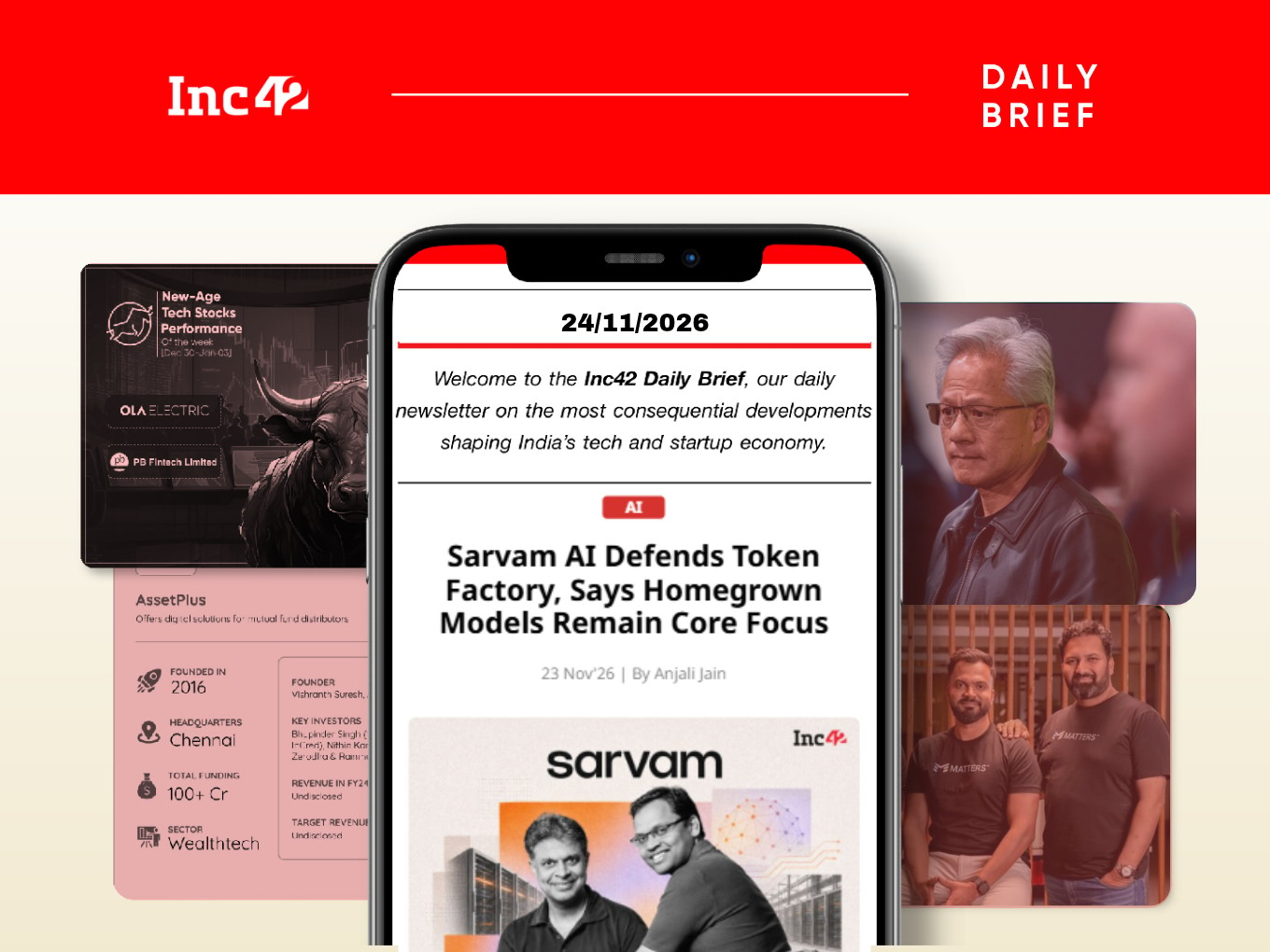
Sarvam Defends Token Factory
Sarvam is standing its ground. Under fire for hosting Chinese AI models on its inference service, the AI unicorn has clarified that it is creating a new commercial opportunity. The startup has also reiterated plans to double down on indigenous LLMs.
Sarvam Hits Back: Pushing back against criticism that Token Factory relies on taxpayer’s money to host models like DeepSeek and Kimi, Sarvam said that the offering relies strictly on privately procured GPUs. The startup said it received no direct cash payouts under IndiaAI Mission, and subsidies ended in March and only came in the form of subsidised hardware.
The Case For Inference: Cofounder Pratyush Kumar said that most of India’s current token demand is served by overseas players. As per him, building domestic inference capacity could reduce this dependence and help local enterprises address issues like higher latency and data residency. He also said that inference is creating a new commercial business for Sarvam, which will generate vital revenue for funding its capex-intensive AI development.
The Sovereign Pitch: To prove that inference hosting has not diluted its core research mission, Sarvam also rolled out Sarvam-105B-1711 – its upgraded open-weight model with sharper reasoning, tool-use, and Indian-language capabilities. The unicorn said that it will roll out new vision, speech, and edge models over the coming two weeks.
The Lingering Questions: That said, Sarvam will have to carry the cost of idle capacity initially as Token Factory scales its inference business. Then, there is data risk, as the AI unicorn currently offers zero data retention only on request. On top of this, new and deep-pocketed players are also disrupting the inference space with regular and niche offerings.
With much on its plate, can Sarvam balance commercial hosting with indigenous R&D? Let’s find out…
From The Editor’s Desk
 Jensen Huang Back At NVIDIA
- NVIDIA’s board has reinstated cofounder Jensen Huang as the chipmaker’s president and CEO. Post his return, interim CEO Colette Kress will transition back to the role of CFO, while Harvey Jones will remain the chair of the board.
- The stunning reversal comes less than a fortnight after Huang resigned as the CEO of NVIDIA, following he had three extramarital affairs – one of which involved a woman accused of spying for China.
- Shares of the chipmaker surged more than 30% after the announcement. Meanwhile, NVIDIA has also constituted a panel to oversee compliance and national security risks. It has also begun searching for a chief compliance officer.
 Matters.AI Bags ₹115 Cr
- The AI-native data security platform, formerly OptiQ.AI, has raised around $12 Mn in its pre-Series A round led by Tanglin Venture Partners to bolster R&D, expand its North American sales operations and ramp up leadership hiring.
- Founded in 2023, Matters.AI is building an autonomous “AI security engineer for data”. Its platform helps enterprises identify sensitive information and tracks how agents interact with this data. It claims to serve 50 clients and has raised ₹175 Cr to date.
- The fundraise comes as cyber attackers use LLMs to find vulnerabilities in enterprise systems, spurring the demand for tools that can remediate AI misuse. This is pushing the broader Indian AI market to become a $126 Bn opportunity by 2030.
 VinFast Vs Cab Drivers
- Police authorities in Bengaluru’s Electronic City have registered an FIR against the president of Karnataka Chalakara Okkuta, G Narayana Swamy, and others for destroying the recruitment posters of the EV giant’s ride-hailing arm Green SM.
- Swamy and a group of unidentified cab drivers allegedly barged into a private hotel in Hosa Road and vandalised the property by tearing up banners and abusing company representatives. This was allegedly done to impede Green SM’s recruitment drive.
- This comes a week after the state government directed transport department officials to stop registering new Green SM taxis until further orders. However, around 100 vehicles operated by the company have already been registered to ply on the roads in the state.
 RBI’s New Fintech Safeguards
- The Reserve Bank of India has proposed a new ‘Stop Switch’ to curb online payment frauds. The new switch will allow users to to disable all outgoing debits, new payment mandates and new UPI app registrations.
- In addition, the central bank has also pitched a voluntary Trusted Person Mechanism for high-value transfers. Under this facility, account holders can nominate an adult as an additional authentication layer for transactions above a specified threshold.
- The new safeguards are part of RBI’s draft new rules for financial institutions. Under this, banks will also have to offer customers granular controls over their digital payment channels. The proposed framework is expected to come into effect by July 2027.
 Meta’s Regulatory Crisis
- The I4C has advised users to avoid exchanging official, financial and other sensitive information via WhatsApp Web. The watchdog has warned that active WhatsApp Web browser sessions could be misused to access user accounts and access their contacts.
- Separately, members of the Indian Youth Congress protested against Meta India’s content moderation policies. Protestors accused the social media giant of political bias, non-transparent content takedowns and restricting accounts linked to opposition figures
- This comes as Meta is facing a regulatory storm in the country. Earlier this year, a report found that paid adverts, promoting CSAM, were running on Instagram India. Following this, the Centre pulled up the platform and directed it to comply with local laws.
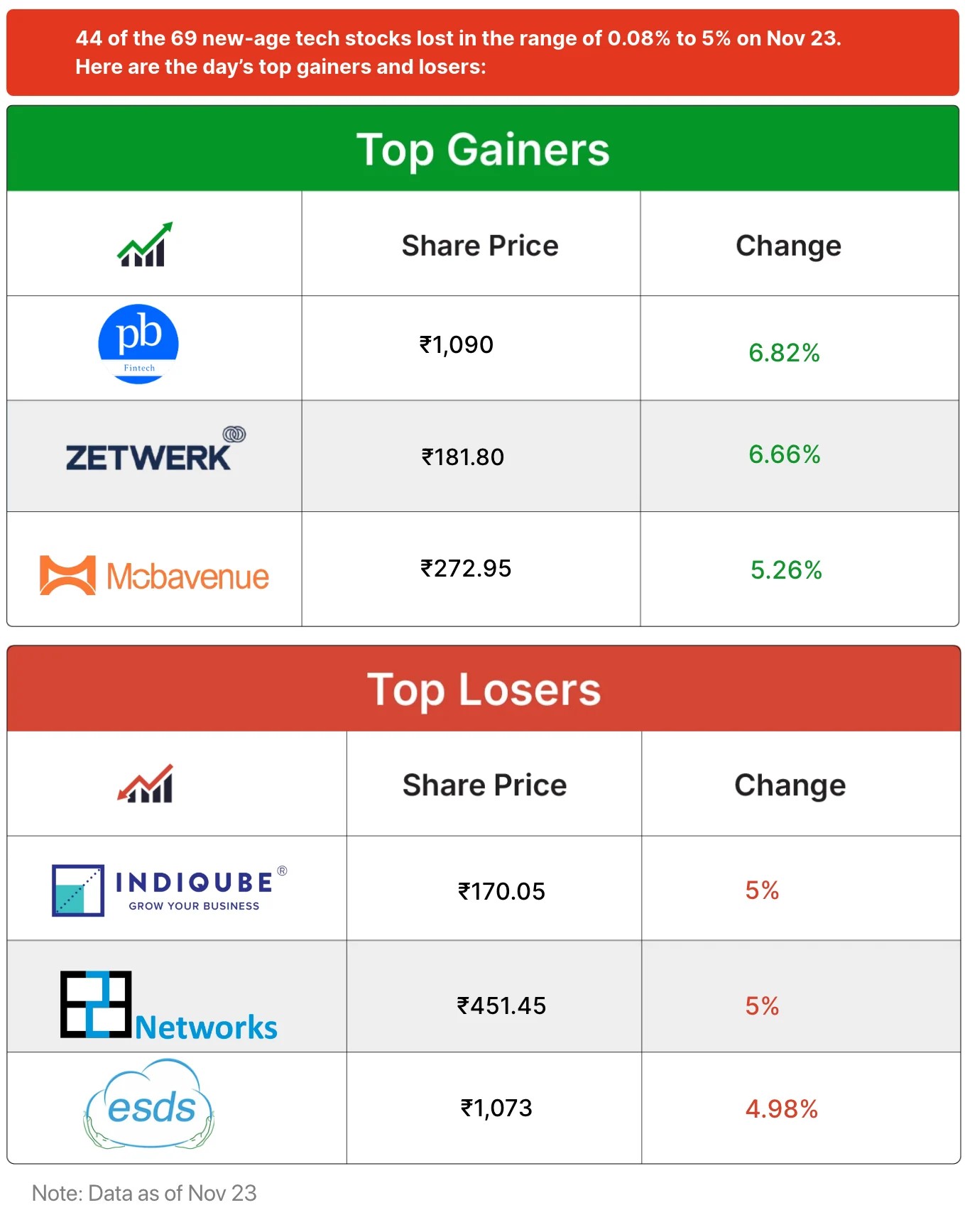
Inc42 Markets
Inc42 Startup Spotlight
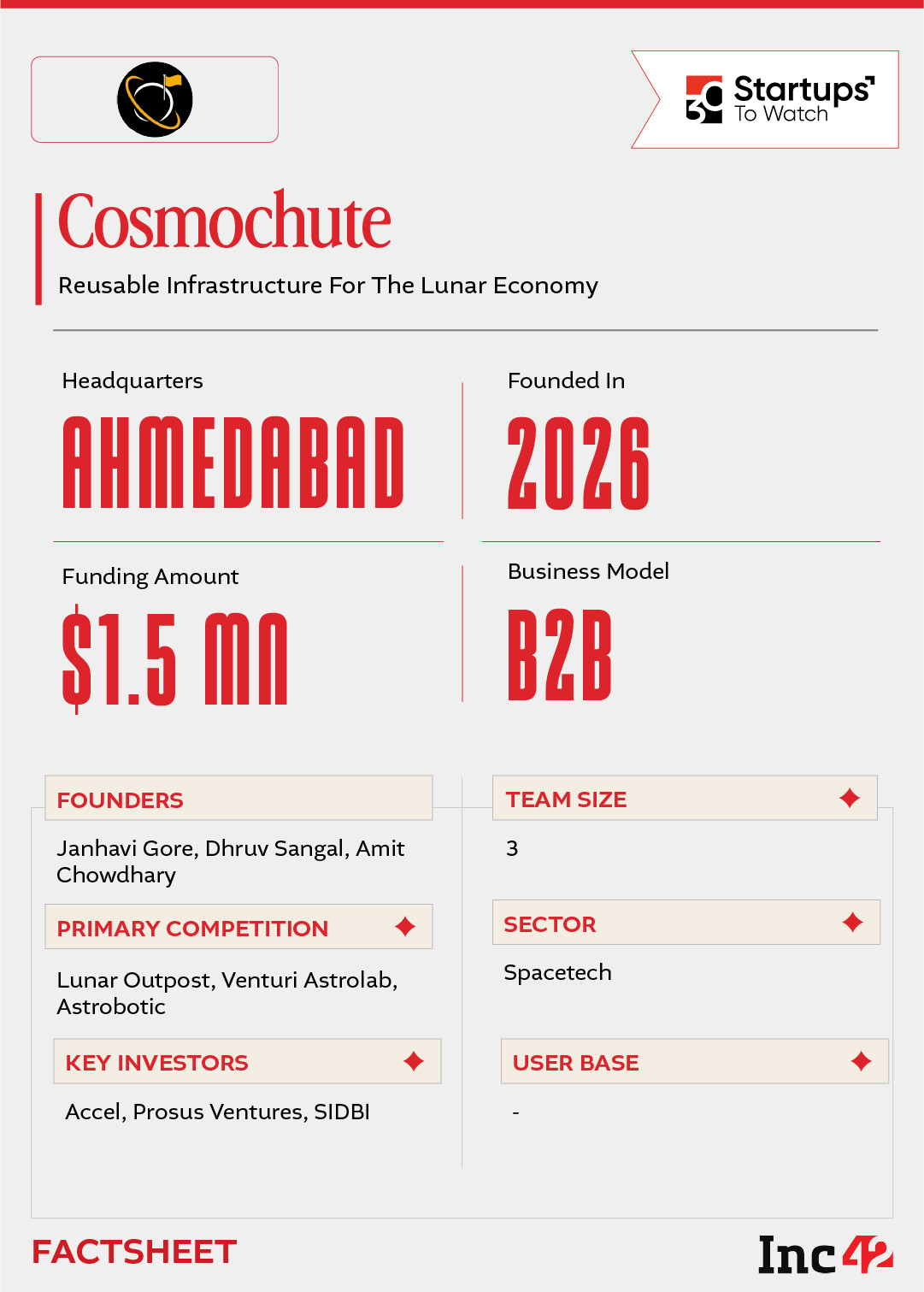
Can CosmoChute Build A Shared Taxi Service To Moon?
Every lunar mission today needs bespoke systems to transport, power and protect its payload. This can make surface operations on the moon slow and expensive. To solve this, CosmoChute is building a reusable platform that multiple customers can share.
A Modular Platform: Founded in 2026, CosmoChute is developing LEAP (Lunar Exploration and Access Platform), a modular system for transporting and deploying payloads on the moon. Its stack combines EPOC, a modular rover; OASYS, a towable trailer; and Cartridge, a payload-survival system.
Made For Lunar Missions: EPOC comes with autonomous navigation and a robotic arm for payload handling and potential surface operations. OASYS adds cargo capacity via payload bays, while Cartridge aims to protect payloads from extreme lunar temperatures. The rover is designed to stay on the Moon, which can also transport payloads delivered by later missions.
This one-size-fits-all approach could make lunar experiments, commercial hardware and scientific instruments cheaper to deploy.
Still In Infancy: Backed by Accel and Prosus Ventures, the startup is currently building ground infrastructure to develop and validate its lunar mobility platform. It plans to test development models in early-2027 and work towards flight qualification by 2028. With the lunar rover and mobility vehicle market projected to become a $4.1 Bn opportunity by 2032, can CosmoChute’s reusable system survive the moon’s harsh environment?
Infographic Of The Day
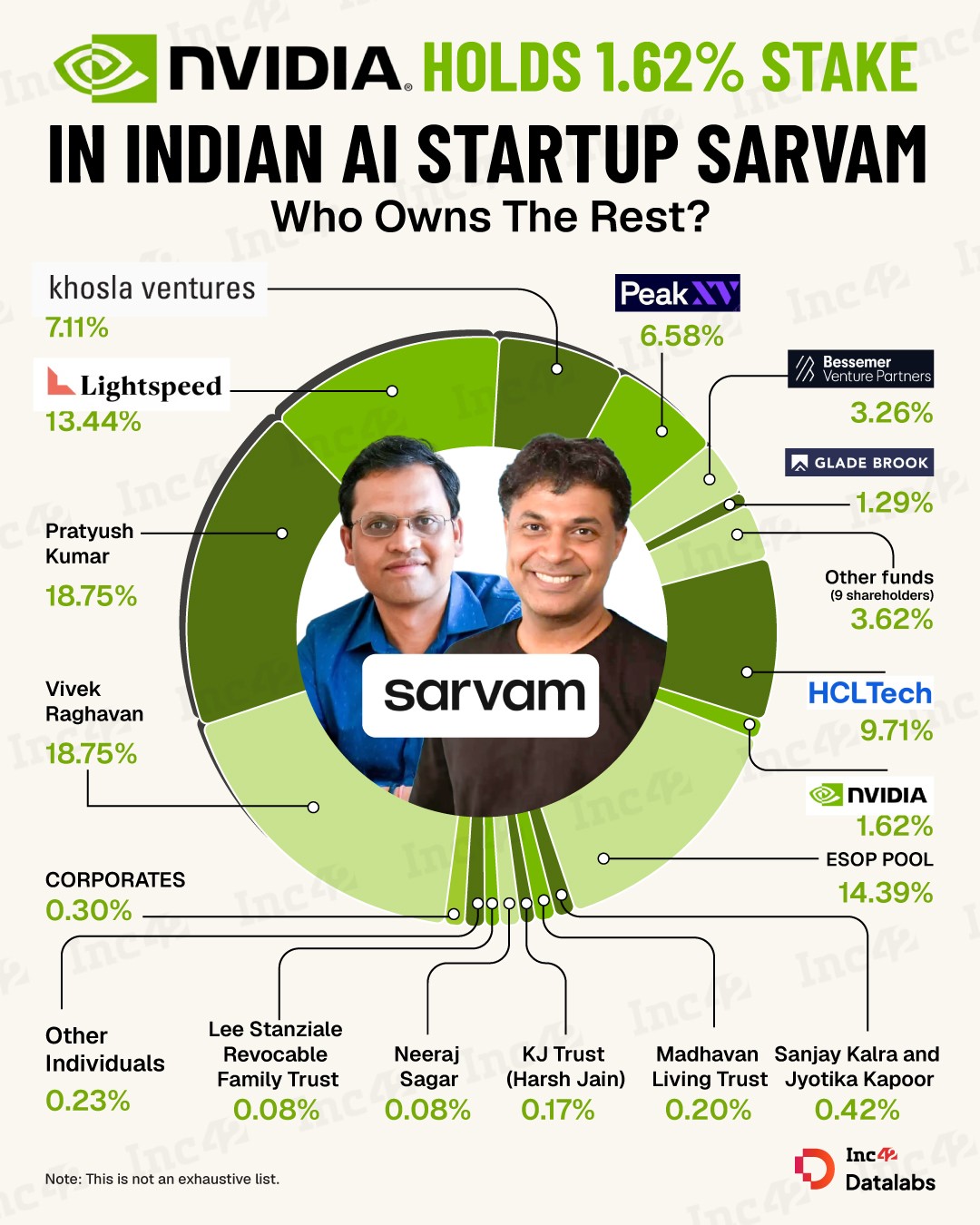
From Nvidia to HCLTech, Sarvam is backed by some of the biggest names in the tech world. Here’s a breakdown of the AI unicorn’s captable…
The post Sarvam Vs Critics, Jensen Huang Returns & More appeared first on Inc42 Media.