
GaadiWaadi -
Triumph Bonneville T40 impresses for its build quality and refinement but is it a true Bonnie? Let us find out here
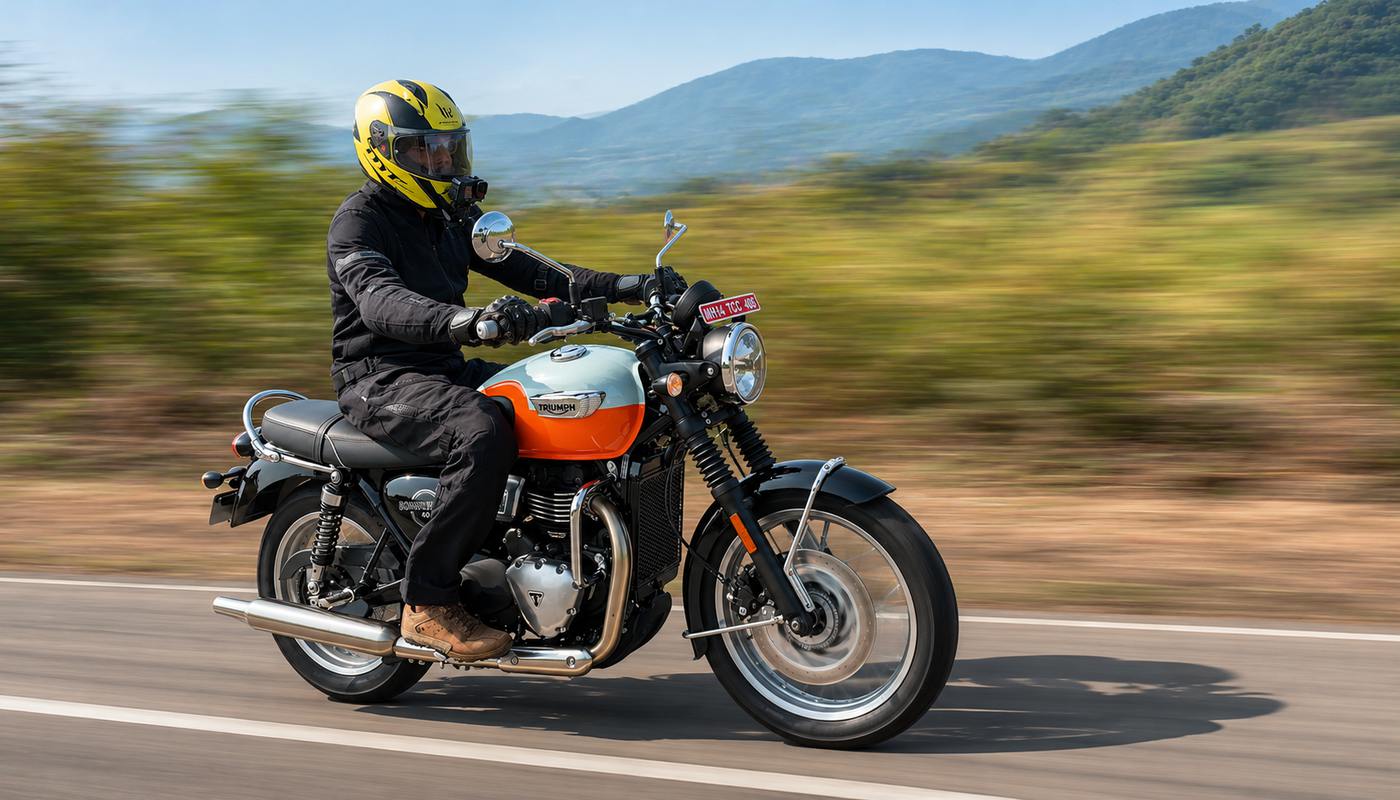
The Triumph Bonneville T40 left me thoroughly impressed by its finish and engine refinement but a bit disappointed by the way its suspension reacted to imperfect roads at speed. Our test route combined smooth highways and a badly damaged ghat section in Kolad and the contrast was impossible to ignore. On good tarmac, the motorcycle settled at 110 to 120 kmph naturally and its motor still had ample pace in reserve. I saw about 135 to 139 kmph on the speedometer but repeated vertical movement from the chassis made me abandon further attempts.
The motor was at around 5,000 to 5,500 rpm in fifth gear, so I felt 150 kmph was attainable on a suitable road. The chassis reaction mattered far more than the number on the instrument panel because the engine had enough reserves for faster travel. For a retro motorcycle that could otherwise make an excellent long distance companion, the difference was difficult to overlook as I found the suspension to be softer than it should be.
The motor produces more power and torque on paper than the Royal Enfield Classic 350, yet it has a markedly calmer personality than other Triumph 400 cc motorcycles. The delivery is deliberately linear and produces little sense of an immediate surge the moment the throttle opens. At 60 to 70 kmph, the engine feels entirely at home. Acceleration is measured, smooth and predictable – exactly the type of response that suits a traditional roadster.
Also Read: Triumph Bonneville T4 Vs RE Classic 350 Top End – Price, Specs & Features Compared
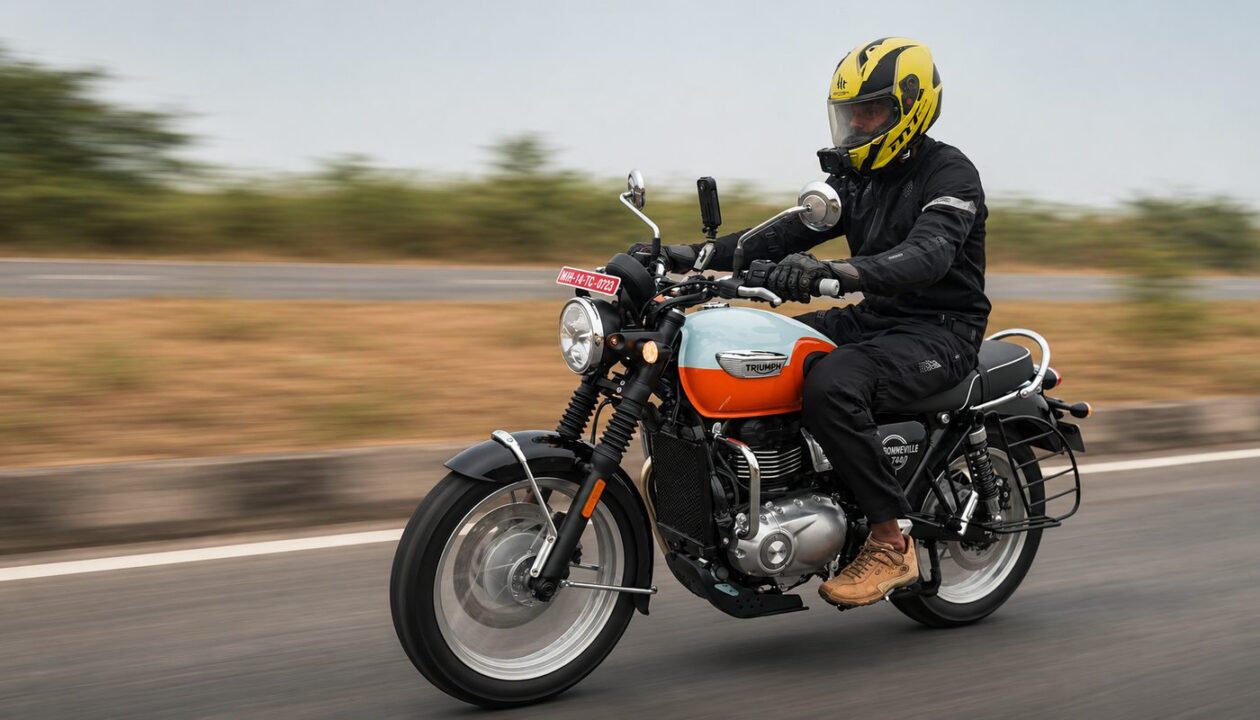
The same characteristic could disappoint riders accustomed to the quicker reaction of the Speed T4 especially at lower engine speeds. I occasionally wanted more urgency, even though the reserves were present and the motor climbed freely towards its higher revs. Refinement impressed me even more. Vibration was barely perceptible up to about 100 kmph, even when I rode barehanded and only a faint buzz developed above that speed.
The gearbox changed ratios precisely, the clutch lever required little effort and the assist-and-slipper clutch felt natural. I did notice a mild knock at about 50 to 60 kmph in a high gear but as you put in the miles, it might not turn out to be a problem. The front end did little to restore my confidence on twisty roads. The wheel combination differs from the Royal Enfield Classic 350, which has 19-inch and 18-inch wheels, and the T40 runs relatively wide MRF Zapper tyres.
Despite those dimensions, I was reluctant to commit to a succession of bends. The front seemed heavy as I tipped the motorcycle into a corner and the tyres did not inspire the confidence I wanted from their grip or feedback. Triumph has fitted lightweight aluminium rims to reduce unsprung mass but the benefit was not evident enough to transform the sensation at the handlebar. The steering required more effort than expected and the ride lacked a natural connection between the front tyre and the rider.
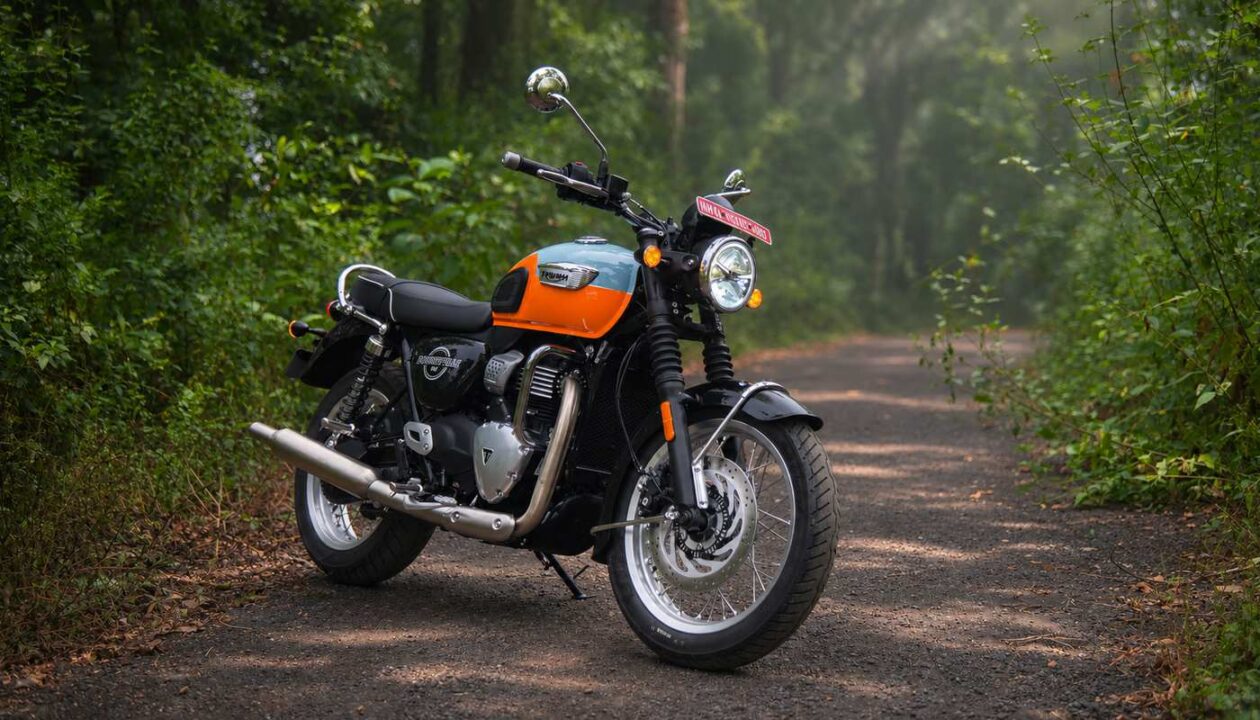
More precise weight distribution and probably a slightly revised steering geometry would do a world of good for how good the rest of the motorcycle feels. The finish, by contrast, is close to faultless. Triumph has executed it to a standard I would normally expect on larger Bonneville motorcycles. The metal fuel tank, sturdy fenders and neatly finished side panels convey excellent craftsmanship and the three-dimensional tank badge gives the motorcycle a suitably classic look.
The hand-painted coach lines deserve attention of their own: the execution is careful, the detailing is tasteful and the result looks especially well resolved in person. Its long wheelbase creates proper big-bike proportions beside the Classic 350. The peashooter exhaust is another success for its aural excellence and finish. The profile recalls the bigger Bonneville T100 and the exhaust note sounds rich even at idle. As the revs climb, the sound acquires more character but does not become unpleasant.
Among the available paint options, the green single-tone finish was my favourite ahead of the dual-tone schemes. The black and red alternatives also suit the bodywork. Visually, the T40 deserves to be judged alongside far more expensive motorcycles. For my height of about 5 feet 10 inches, the ergonomics were an immediate positive. The seat has generous cushioning and a grippy surface, so it was easy to move forward or rearward and hold the tank securely between my knees.
Mid-mounted foot pegs establish a neutral leg position. The handlebar sits upright and is fairly wide, an arrangement that helped in traffic gaps, overtakes and relaxed highway travel. The seat was agreeable even on the longer stretches of our route. Unfortunately, its comfort could not compensate for the suspension once the road became uneven. At low speeds the telescopic fork and rear twin shocks absorbed potholes reasonably well. At greater pace, repeated bumps sent pronounced shocks into my body and the motorcycle started to pitch vertically.
Broken mountain roads were especially troublesome. Highway undulations and raised bridge joints created the same reaction, even though the motor was perfectly happy at the prevailing speed. I wanted a more controlled response from the suspension – not necessarily a firmer ride everywhere. Better balance between initial absorption and high speed stability would noticeably improve the motorcycle.
The circular TFT instrument cluster looks polished, reads well and contains a generous selection of functions. Navigation worked well on our ride and the companion phone application proved convenient. Yet I would have preferred a discreet semi-digital panel. The bright modern screen looks slightly out of place against the tank, coach lines and traditional peashooter exhaust. If the change reduced the price by around Rs. 20,000, it would make the motorcycle more attractive to me compared to rivals.
Electronics also account for some of the differences between variants. The higher versions have five ride modes, two individually configurable and receive cornering ABS and lean-sensitive traction control. The entry-level T4 has three modes and regular electronic assistance alongside a dual-channel ABS system. The advanced systems are welcome safeguards but I did not feel the motorcycle required them to deliver its relaxed road manners.
At a brisk pace, I would expect around 25 to 26 kmpl, and a more measured approach might return close to 30 kmpl. The variant decision comes down largely to price. The entry-level T4 was near Rs. 3 lakh and the higher T40 versions approached Rs. 3.4 lakh on-road. By comparison, the top-end Classic 350 was near Rs. 2.7 lakh – a difference of about Rs. 30,000 against the entry Triumph. The wire-spoke wheels also have tube-type tyres – a consideration for riders who plan frequent long trips far from tyre-repair facilities.
Touring accessories are available, yet a puncture repair may require more effort than on a tubeless wheel. My choice would be the T4 – preferably in green as it is a value-for-money grab considering the nameplate. It has the authentic Bonneville appearance, an exceptionally refined engine and enough pace to justify the extra expenditure. The suspension is its weakest element for me and a more controlled setup would do more for the motorcycle as it excels in plenty of other areas and perhaps blows some of the them out of the water in some regards!
The post Triumph Bonneville T40 Ride Review – Timeless But Is It Classic? appeared first on Gaadiwaadi.com - Latest Car & Bike News by Surendhar M.