
When we vote in a national or state election, we often have a document to refer to: the political party’s manifesto. It tells us what the party promises to do if elected, from creating jobs and improving healthcare to building infrastructure. And once the government is in power, those promises give voters something to question it about.
“But what happens when we vote for our village’s Gram Pradhan? What are the promises we can expect them to make? And, more importantly, what can we hold them accountable for once they are elected?”
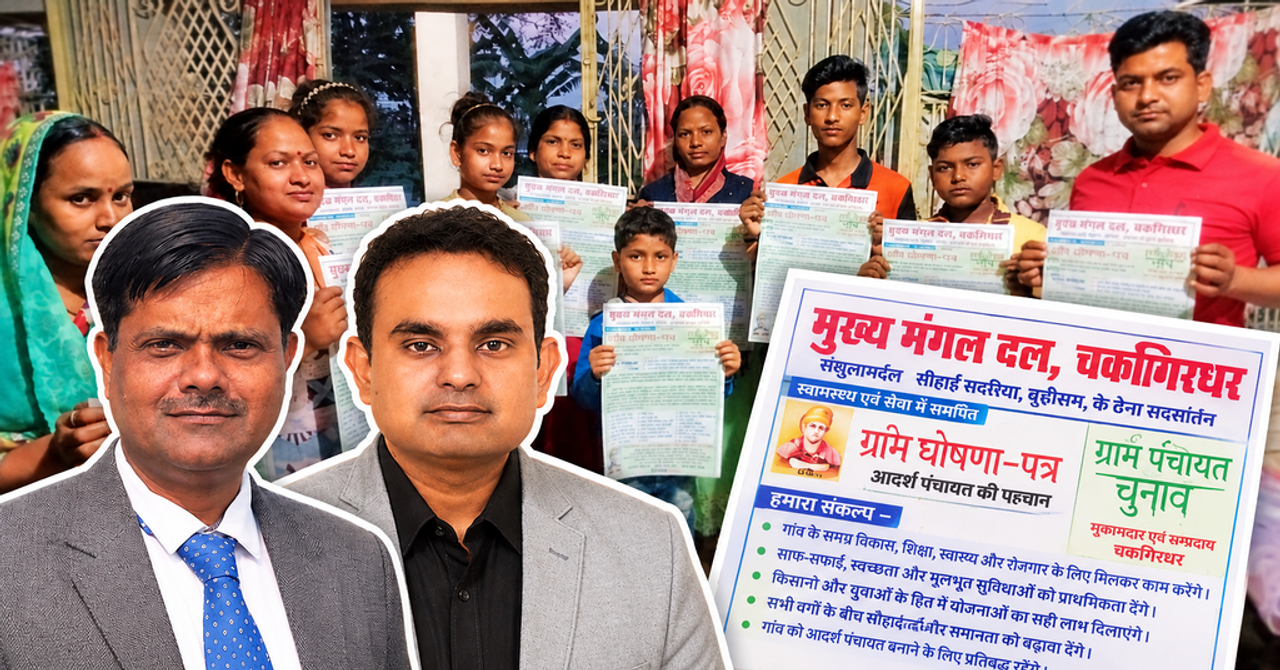
This is the question that IAS officer Dr Heera Lal wants to bring into village elections through a 25-point Village Manifesto. His idea is straightforward: village elections, too, should be fought on issues and written promises, giving people a clearer say in what development should look like in their communities.
“Elections are contested in Parliament on manifestos. In MLA seats, on manifestos. But in the village, we do not have any manifesto,” he explains.

For him, a manifesto is essentially a written promise. If a candidate commits to addressing specific problems before being elected, villagers have something tangible to refer to afterwards. Without such a commitment, he argues, it becomes difficult for voters to question their elected representative about what they have delivered.
Beyond roads, schools and drinking Water
The 25-point framework tries to broaden what villages consider development. Conversations around rural progress often centre on a handful of visible needs, such as roads, schools, drinking water and electricity. But several other factors shape a village's quality of life, too.
Saurabh Lall, CEO of Model Gaon, which developed the framework, says the idea emerged from recognising that a better life could not be measured through just three or four parameters.
“Our first initiative was to make them understand that a better life entails a lot many other things than just having these three, four things being worked upon,” he says.
The manifesto therefore looks at a wider range of issues, including health, education, sanitation, income generation, employment, access to technology, sustainability, women's empowerment, local talent, dispute resolution and proper documentation of village records.

Some of these priorities may not immediately come to mind when people think about rural development. But they can have a direct bearing on everyday life. A village where small disputes repeatedly escalate into expensive legal cases, for instance, faces a different challenge from one where the most pressing concern is access to irrigation or employment.
The framework was deliberately simplified into a one-page document so that villagers could understand and engage with it. It was also designed to be personalised.
“All those 25 things could mean different things for different people. And their priorities in life would also differ based on the phase of life that they were in, the context that they were living in,” says Saurabh.
The idea, then, is not to impose the same development agenda on every village. It is to give communities a framework through which they can identify what matters most to them.
What should your village's manifesto actually promise?
A list of 25 priorities is only a starting point. The more important exercise is deciding which of those priorities need attention first in a particular village.
To do this, the process involves conversations at the ward level, where residents can raise problems they experience in their everyday lives. These meetings typically bring together around 25 to 35 people from a particular part of the village.
The concerns can be remarkably specific. Saurabh recalls residents raising issues such as a drain being constructed inconveniently outside someone's home or a neighbour encroaching on a portion of their land.
One recurring concern was the number of small local disputes that were escalating into court cases. Residents often had to travel to cities, spend money, and wait for lengthy legal processes to resolve issues that could potentially be addressed locally.

“If people stop wasting time in resolving their petty disputes, they would end up either studying or working in their farms or looking for jobs,” he says.
In such cases, dispute resolution could become one of the village's most important priorities, even if it might not feature prominently in another village's manifesto.
The meetings also allow the Gram Pradhan to hear these concerns directly. Rather than treating the manifesto as a document prepared by an outside organisation, the aim is to make it a reflection of what residents themselves want addressed.
Saurabh believes this participation is essential to meaningful development. “Unless and until the beneficiary is involved in the designing of the programme itself, it never really gets very comprehensive.”
From written promises to accountability
For a manifesto to mean something beyond election season, its promises must translate into action. That requires villagers to know what their priorities are, and their elected representatives to understand how to work towards them.
Saurabh says the process also involves helping Gram Pradhans understand their rights, responsibilities, and the administrative procedures involved in local governance. The aim is to help them identify solutions by bringing together existing government schemes, local resources and relevant expertise.
“We said that installing another system is not the solution. Galvanising the existing system is probably going to be more effective,” he says.

This is important because a village's problems do not always require an entirely new project or a fresh allocation of funds. Sometimes, the challenge is knowing which existing resources can be brought together to address a particular need.
The larger ambition is to take this framework into upcoming Gram Pradhan elections. Dr Heera Lal describes the campaign with a slogan: “Chunaav mudra se nahi, muddon pe hoga” — elections should be fought on issues, not money.
The proposal is to make the village manifesto a part of the election conversation, so candidates can put their priorities in writing and voters can assess them against the needs of their communities.
Ultimately, the 25-point framework raises a question that goes beyond any one organisation or development initiative: shouldn't people have a clearer say in what their elected village representatives promise to deliver?
A manifesto cannot guarantee that every problem will be solved. But it can give a village something to begin with: a shared list of priorities, written commitments and a way to ask its elected representative what has been done.