
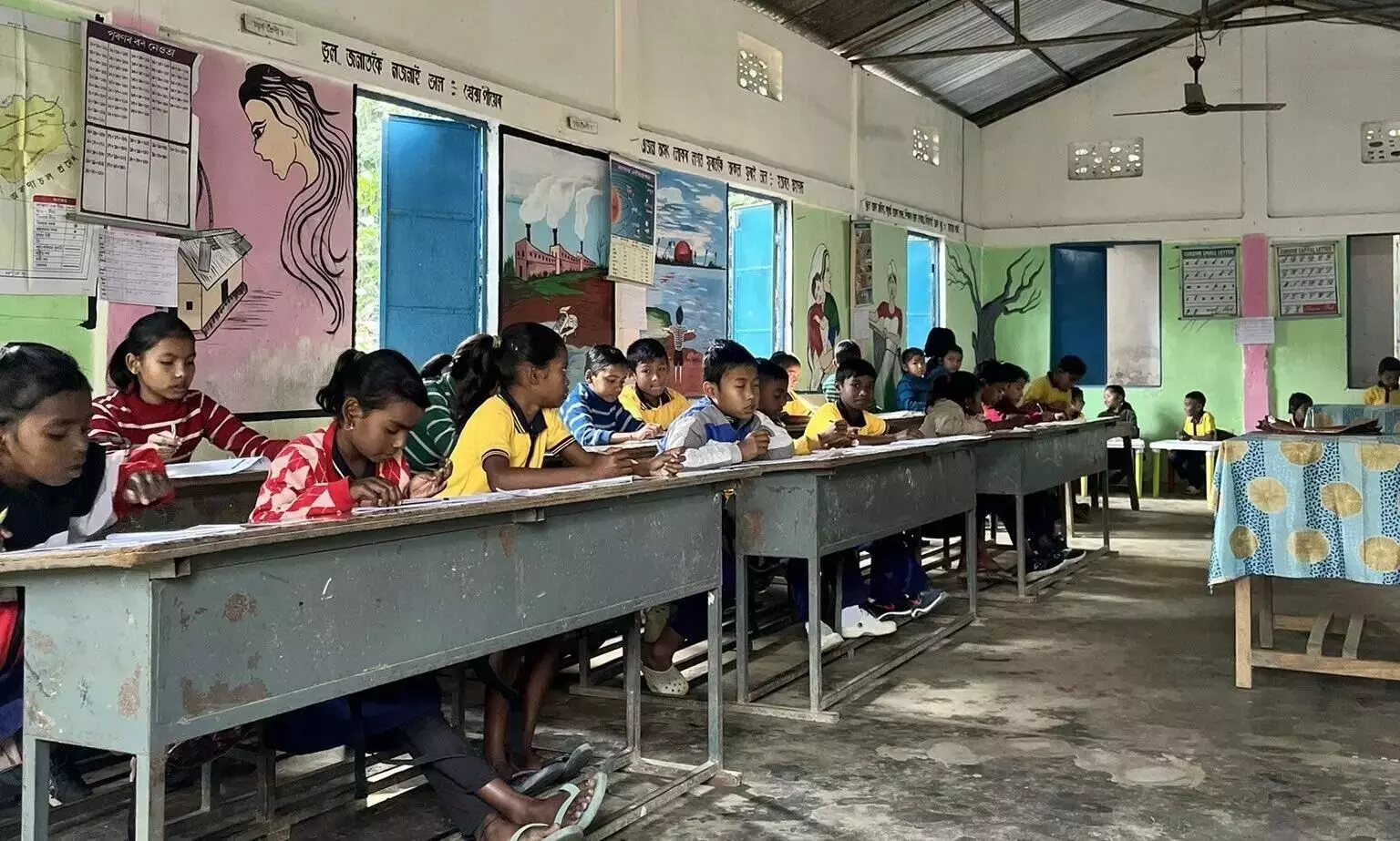
A file image of a classroom in Assam. (Picture used for representational purpose)
Guwahati, Nov 15: The school dropout rate in Assam is coming down, but it is still higher than the national average, State Education Minister Dr Ranoj Pegu has admitted.
Most of the dropouts take place at the secondary level, he said.
In an interview with The Assam Tribune, the Education minister said that as per UDISE records, the State’s dropout rate is 1.4 per cent at primary level, 4.3 per cent at upper primary and 14.3 per cent at secondary level.
Secondary dropout has fallen from 25.1 per cent to 14.3 per cent in two years, a fall of nearly 11 per cent. The rate of dropout is higher in case of boys than girls. “We acknowledge the rate is still above the national average at every stage, and the secondary stage is our priority,” Pegu added.
The highest dropout is at the secondary stage between classes IX and XII. Roughly, one in seven students leaves before completing Class X.
A second major dropout occurs after Class X. Only 53.7 per cent of students move from Class X to XI, the lowest transition rate of any state.
The minister revealed that there are several reasons for the high dropout rate. The first reason is economic. In most cases, the students need to support the family income, and particularly in the tea garden areas, the children start working in the gardens at a very young age.
Floods, river erosion and repeated displacement in char and riverine areas, difficult terrain in hill districts, distance to school, and poor roads and transport system also result in dropouts.
The third major reason for dropout is poor academic standards. Failure in Class IX or HSLC and low learning levels contribute to the dropout rate as students who fall behind lose interest and stop attending classes.
Other major reasons are early marriage of girls, low parental awareness, trafficking risk for girls in tea garden areas, etc.
Pegu further admitted that gaps in infrastructure and teacher availability were other reasons as there are over 3,000 single-teacher schools.
To a question on what were the most-affected groups of students, Pegu revealed that students from tea garden communities, char and flood-affected areas, hill areas, and SC/ST drop out at an early stage as they have to support family earnings.