
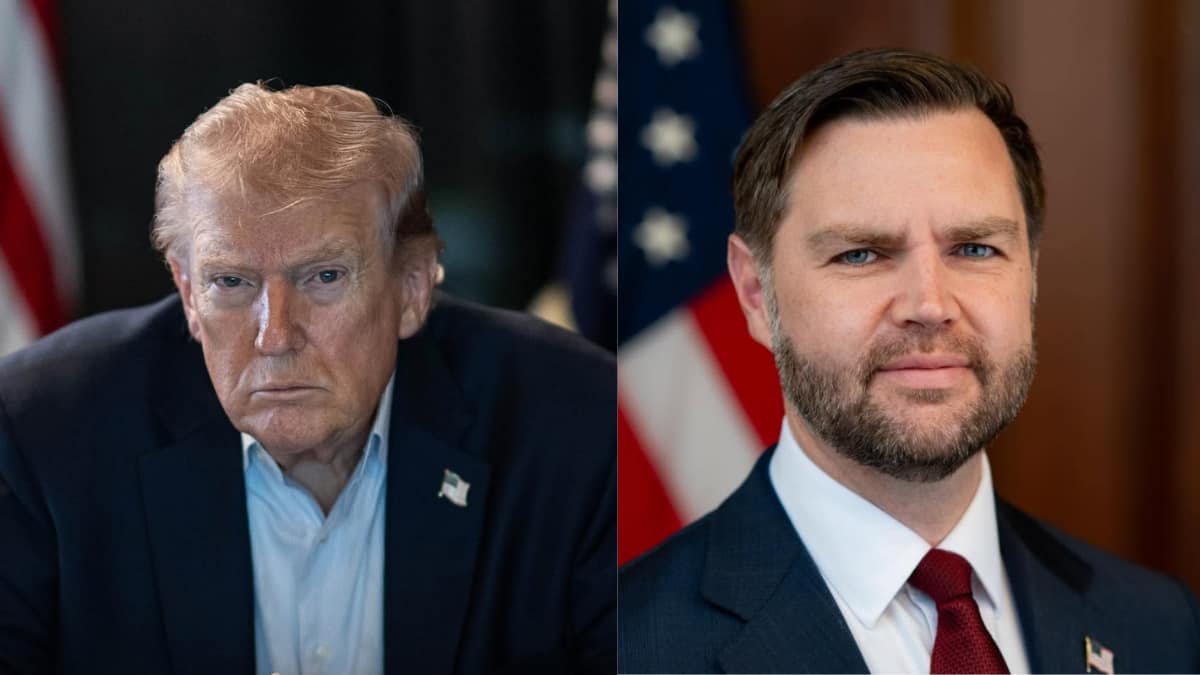
US President Donald Trump has refused to indicate whether Vice President JD Vance is preparing to contest the 2028 presidential election, leaving questions about the Republican Party's succession plans unanswered as it struggles to recover from its crushing midterm defeat. Speaking to reporters at the White House on Wednesday, Trump said he had discussed several matters with Vance but was uncertain about his plans for the next presidential race.
'Maybe He Wont Run': Trump
“I speak to him about a lot of things, but I mean, we’ll see what happens. … You don’t know who’s talking about running,” Trump said.
“You can have people running. You can have a lot of people. Maybe or a lot of people are running. Maybe nobody’s going to run. Maybe he won’t run. I don’t know who’s going to run.”
The remarks came hours after Vance publicly attributed the Republicans' poor performance in the 2026 midterm elections to the administration's war against Iran. His assessment has fuelled speculation about whether the vice president is attempting to distance himself from Trump's controversial foreign policy decisions ahead of a potential 2028 presidential campaign.
Vance has long been considered a leading contender to succeed Trump and had previously indicated that he would make a decision about his political future after the midterm elections.
JD Vance Blames Iran War For Republican Midterm Defeat
In a lengthy post on X on Wednesday, Vance identified the US-Israel military campaign against Iran, which began in February, as the primary reason behind the Republican setback.
“The real reason we lost is obvious to almost everyone,” Vance wrote. “The reason we lost is the war. The president himself said so last night.”
He also questioned whether the military operation justified its political consequences, particularly the loss of the Senate.
“If you’d like to argue it was worth it, that losing the Senate for the next 6 years was worth it, then do so. Argue it was a worthwhile cost to pay. Agree or disagree, that’s at least honest,” he added.
Vance identified four major concerns influencing voters: opposition to the Iran war, rising living costs and inflation, demands to prioritise American interests, and dissatisfaction with Washington's relationship with Israel.
He rejected claims that poor voter turnout was responsible for the Republican losses, arguing that several people who supported Trump and Vance in 2024 switched their allegiance to Democrats.
Trump Admits Iran Conflict Hurt Republicans But Defends Decision
Trump acknowledged that the conflict had contributed to the party's electoral difficulties, particularly because it pushed petrol prices higher in the short term.
However, he defended the decision to launch the military campaign, maintaining that preventing Iran from developing nuclear weapons justified the action.
The president's position contrasts with Vance's more direct criticism of the war's political consequences, highlighting differences within the Republican leadership over the administration's foreign policy.
ALSO READ: Abdul El-Sayed Enters US Senate: What Is His Karnataka Connection?
Ron DeSantis Warns Of Long-Term Political Damage
Florida Governor Ron DeSantis has also joined the debate over the Republican Party's future following the Democratic victories.
Describing the party's performance in several parts of the country, DeSantis called it an “extinction-level event”. He warned that the consequences could extend beyond the next election cycle and damage Republican prospects nationally for years.
He pointed to Florida as an example of how Republicans could retain voter support, arguing that the party needed a stronger governance record to regain public confidence.
With Vance and DeSantis emerging as prominent voices in the post-election debate, the Republican Party's direction and potential 2028 presidential contenders are already becoming subjects of political speculation.